
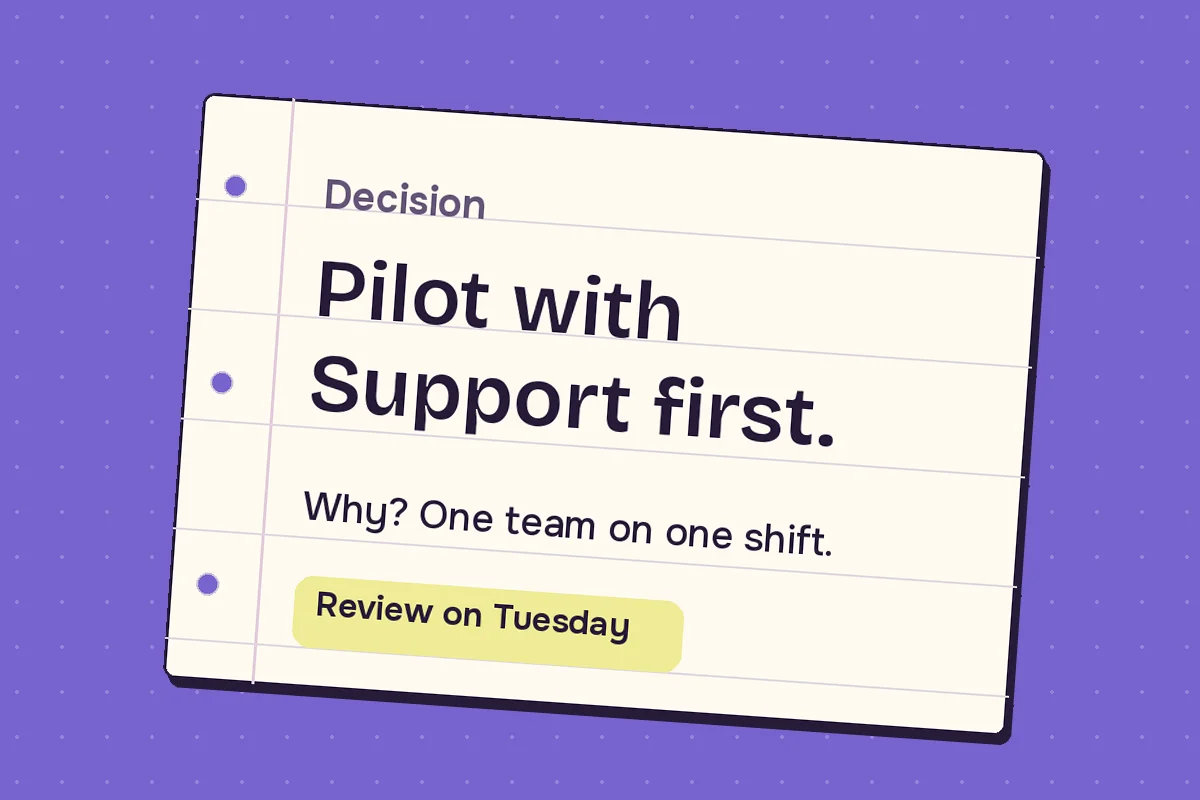
Three weeks after a meeting, someone asks why the team chose the smaller pilot. The notes say “Pilot approved,” but the budget, the alternatives and the condition for expanding it are missing. Everyone remembers a different part of the conversation.
A decision record doesn’t need to reproduce the meeting. It needs to give a future reader enough context to use the choice and know when to revisit it. Suppose a team is deciding how to test a new support guide.
State the choice plainly
Start with the decision and its scope: “Run the guide with the support team for two weeks before offering it to everyone.” Add the date and the person or group accountable for the decision. If approval is still pending, label the record as a proposal instead.
Be precise about what was not decided. A pilot isn’t an agreement to roll out the guide to every customer. That boundary prevents a short note from becoming permission for a much larger change.

Capture the trade you accepted
Write down the reason that tipped the choice, along with a meaningful cost. For example: “Support can test the guide quickly, but this won’t tell us how new customers use it on their own.” That sentence helps a later reader understand both the logic and its limit.
Include an alternative when it explains the trade: “We considered a wider launch, but wanted to fix obvious gaps first.” You don’t need every suggestion from the discussion. Link to the underlying research or proposal if someone may need to inspect the evidence.
Give the choice a review point
Choose a date, an event or a condition that would make another look worthwhile. For the pilot: “After two weeks, the support lead will review unanswered questions and recommend whether to expand, revise or stop.” Name who will bring the decision back, not just who might attend the review.
A review point isn’t a promise that the choice will change. It is a prompt to compare the result with what the team expected. If the test reveals a serious problem earlier, the team needn’t wait for the calendar date. A small, easily reversed choice, like the order of links in an internal guide, may need no formal review at all.
File it where the next question will land
Put the record next to the work it governs: the project brief, issue or shared decision log. Link it from the meeting notes rather than leaving the only copy in a private message. Use a descriptive title such as “Support guide: two-week pilot” so someone can find it without remembering the meeting date.
If the choice changes, add a dated update and link the new decision. Preserve enough history to explain why an earlier version existed. Correct factual mistakes openly; a decision record is a working reference, not a courtroom transcript.
Support guide pilot
- 6 May · Decision
- The support lead approved a two-week trial of the new guide with the support team.
- Why this group
- Support can try the guide on real questions and flag missing steps before a wider release.
- What this leaves open
- We still need to find out whether a new customer can use the guide without help.
- 20 May · Review
- The support lead will bring the questions the guide couldn’t answer. Then we’ll decide whether to revise it, widen the trial, or stop.
Read the finished note as someone joining later: what was chosen, why was it reasonable then, and who will notice if the assumptions no longer hold? If those answers are there, the record has earned its place.